
Indian stock markets are expected to be driven mostly by global factors this week amid a lack of local triggers and earnings season largely coming to an end, say analysts. Crude oil prices, rupee movement and US Federal Reserve meeting minutes to be released this week will also influence the market sentiment. "With the earnings season behind us, global cues would largely dictate the trend in the coming week," Ajit Mishra, SVP - technical research, Religare Broking Ltd, said.

Noting that these three Cs haunt Indian education today, the Congress Parliamentary Party chairperson said in an article that this "carnage" of India's public education system must end.

Despite its admirable competence and proven track record, the RBI doesn't have the capacity to supervise an economy that's growing so fast and becoming larger by the year, points out T C A Srinivasa Raghavan.

'Geopolitics will be the most important driver of financial markets in 2025.'
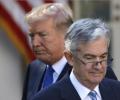
In a drastic measure to stem any major disruption to the US economy as a result of the coronavirus outbreak, the Federal Reserve has cut its benchmark interest rate to almost zero and said it would buy USD700 billion in bonds. The covid-19 pandemic has sickened more than 156,000 people worldwide and left more than 5,800 dead. The death toll in the US stands at 68, while infections neared 3,700.

Of the eight RBI governors who have held office since the 1991 economic liberalisation, Bimal Jalan had the longest stint and S Venkitaramanan, the shortest. Current Governor Shaktikanta Das will overtake Bimal Jalan before completing his second term in December, points out Tamal Bandyopadhyay.

With 7 per cent economic growth, India is not creating enough jobs as reflected by the number of applicants for vacant posts in some states, Reserve Bank's former governor Raghuram Rajan said and suggested the government needs to focus on promoting labour-intensive industries to generate employment. Rajan further said some Indians, especially those at upper level, are comfortable and have high incomes, but consumption growth from the lower half of the country has still not recovered to pre-pandemic level.

In the Sensex pack, 20 stocks ended in the red while 37 of the Nifty constituents closed the session with losses. NTPC was the biggest loser among the Sensex constituents, ending with a loss of 2.71 per cent.

The RBI is fully aware that the high-cost loans and high indebtedness of the borrowers could pose financial stability risks, if not addressed by these NBFCs. Governor Shaktikanta Das has issued a stern warning, saying the RBI is closely monitoring these areas and will not hesitate to take appropriate action, if necessary, if the culprits don't opt for self-correction. Watch out for some action, soon, notes Tamal Bandyopadhyay.

To minimise risk, invest in a debt fund whose duration matches your investment timeframe.

Equity benchmark Sensex surged past the 57,000-mark by rallying over 1,000 points on Thursday, tracking an overall bullish trend in global equities despite the US Federal Reserve hiking rates. The 30-share BSE index closed 1,047.28 points or 1.84 per cent higher at 57,863.93. Likewise, the NSE Nifty surged 311.70 points or 1.84 per cent to end at 17,287.05.

The National Company Law Appellate Tribunal (NCLAT) has reserved its order on Amazon's plea challenging the decision of regulator CCI to suspend approval for the e-commerce major's deal with Future Coupons. In December last year, Competition Commission of India (CCI) suspended the approval given by it in 2019 for Amazon's deal to acquire a 49 per cent stake in Future Coupons Pvt Ltd (FCPL). The regulator had said that Amazon suppressed information while seeking clearances for the transaction back then and also slapped a fine of Rs 202 crore on the company.

World champion D Gukesh will take on Fabiano Caruana of the United States in the two-game quarter-final after the latter picked the Indian in a unique format typical of Freestyle Chess Grand Slam, in Hamburg, Germany.

US's terrible political and economic leadership will ultimately cost the dollar its value. India must act early to avoid being dragged down, suggests R Jagannathan.

International Monetary Fund (IMF) Deputy Managing Director (MD) Gita Gopinath has condemned the "terrible and disturbing" incident of rape and murder of a trainee doctor in Kolkata. "Personally, it is terrible to have any event of this kind. It is disturbing," she told Business Standard in New Delhi.

Gold price declined Rs 305 to Rs 56,035 per 10 grams in the national capital on Thursday amid a fall in rates of precious metal in the overseas markets, according to HDFC Securities. The yellow metal had settled at Rs 56,340 per 10 grams in the previous trade. Silver also plummeted Rs 805 to Rs 65,095 per kg.

A bench of Justices Sanjiv Khanna and SVN Bhatti, which reserved its verdict on two separate regular bail pleas of Sisodia in the corruption and money laundering cases, told the ED it cannot go by the assumption of bribe having been paid, and whatever protection an accused enjoys under law needs to be granted.
Equity benchmarks Sensex and Nifty on Friday spurted by nearly 2 per cent, propelled by heavy buying in IT, metal and financial stocks amid a rally in global markets after lower-than-expected US inflation data. A strong rupee against the US dollar and unabated foreign capital inflows further bolstered sentiment, traders said. Easing US inflation triggered speculation that the US Federal Reserve might slow down the pace of interest rate hikes.

Given the possibilities that next year's assembly elections could throw up, Stalin told the state assembly that an interim report had to be submitted by January 2026. The outcomes may well find its way into the DMK's poll manifesto, thus seeking to keep the electoral focus still on the BJP-ruled Centre and Prime Minister Modi, observes N Sathiya Moorthy.

Among the Sensex firms, HDFC Bank, Bharti Airtel, Infosys, UltraTech Cement, Tata Steel, Wipro, Kotak Mahindra Bank, Reliance Industries, Tech Mahindra and JSW Steel were the major laggards. Power Grid, Titan, Mahindra & Mahindra and NTPC were among the gainers.

In more than one way, it's a setback for the DMK and Chief Minister Stalin in political terms. The electoral fall-out, if any, will have to wait until the next summer, only when assembly elections are due in the state, explains N Sathiya Moorthy.

Tahawwur Hussain Rana, a key accused in the 26/11 Mumbai terror attacks, was brought to India on Thursday after being "successfully extradited " from the US, the National Investigation Agency (NIA) said. The 64-year-old Canadian citizen of Pakistani origin landed in Delhi in a special plane on Thursday evening, ending days of speculation of when and how he will be extradited, officials said. The NIA said in a statement that it had secured the successful extradition after years of sustained and concerted efforts to bring to justice the key conspirator behind the 2008 mayhem that claimed 166 lives. Rana is accused of conspiring with David Coleman Headley alias Daood Gilani, and operatives of designated terrorist organisations Lashkar-e-Taiba (LeT) and Harkat-ul-Jihadi Islami (HUJI) along with other Pakistan-based co-conspirators, to carry out the the three-day terror siege of India's financial capital.

Net NPAs increased to Rs 36,260 crore in the December quarter from Rs 34,843 crore in September and Rs 33,116 crore in December 2023, observes Tamal Bandyopadhyay.

ICICI Bank was the biggest loser in the Sensex pack, slipping 2.81 per cent, followed by Mahindra & Mahindra, State Bank of India, UltraTech Cement, IndusInd Bank, Kotak Mahindra Bank, Tata Motors, Bajaj Finserv, Axis Bank and Power Grid. Tech Mahindra, Bharti Airtel, Infosys, Asian Paints, Hindustan Unilever, Larsen & Toubro and Titan were the gainers.
Among the Sensex firms, HDFC Bank emerged as the biggest loser, falling 4 per cent. JSW Steel, Reliance Industries, UltraTech Cement, Maruti, Tata Steel, Wipro, Tech Mahindra, Bharti Airtel and Larsen & Toubro were the other major laggards. Power Grid, Asian Paints, Sun Pharma, Axis Bank, NTPC, ITC and Infosys were among the gainers.

HCL Technologies was the biggest gainer in the Sensex pack, rising 5.58 per cent, followed by Tata Consultancy Services and Infosys, State Bank of India, Tech Mahindra, Tata Steel, NTPC and Wipro. In contrast, Nestle, Bharti Airtel, Maruti and ITC were among the laggards.

Stock markets would take cues from the biggest event of the week -- the US Fed interest rate decision, besides tracking the trends in global markets and trading activity of foreign investors, analysts said. Last week, a heavy decline in smallcap, midcap firms, foreign fund outflows and elevated crude oil prices in the international market dented investors' sentiments. Experts said equity markets may remain volatile in the near-term amid a host of global central bank's monetary policy decisions lined up during the week.

Gold, a safe-haven bet, is likely to continue its record-smashing journey in the New Year, rising to Rs 85,000 per 10 grams and even Rs 90,000 level in domestic markets if geopolitical tensions and global economic uncertainties continue.

After hearing the case, the chief justice reserved the judgment without giving a date for its announcement.

The domestic equity markets are expected to extend gains following the strong showing of the Narendra Modi-led Bharatiya Janata Party (BJP) in the state elections - a crucial precursor to the general elections in May. The BJP decisively secured victories in three of the four key states - Madhya Pradesh, Rajasthan, and Chhattisgarh. While the battles in these three states were closely contested, the scale of the BJP's triumph has surprised many, heightening expectations for regime continuity in 2024 - a positive catalyst for the markets.

State Bank of India (SBI), India's largest lender, is looking to raise Rs 10,000 crore through 15-year infrastructure bonds as early as next week, said multiple sources aware of the development. Market participants expect a coupon in the range of 7.15-7.18 per cent for SBI's upcoming infrastructure bond issuance. This comes as demand for longer-tenor papers has remained strong in recent domestic capital market offerings.
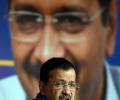
He asserted that the AAP cared for the people of Delhi and that's why they announced financial assistance for the Resident Welfare Associations to help people ensure better security in their neighbourhood by hiring private security guards.

A combination of factors, including heavy investments in US Treasury bonds and dollar sales at a healthy profit, facilitated the Indian central bank in transferring a record surplus of Rs 2.11 trillion to the government for 2023-24 (FY24). The RBI's dollar purchases increased in FY24, supported by robust capital inflows endorsing the economy's health.

Trading in the domestic stock market would be influenced by trends in the global equities, macroeconomic data and foreign fund movement in a holiday-shortened week, analysts said. Markets may face volatile trends on Monday after Federal Reserve Chair Jerome Powell's speech at the Fed's annual economic symposium in Jackson Hole on Friday.

Putin is keen on establishing a good personal rapport with Trump and anchor a meaningful US-Russia partnership, realistic enough to accept that Trump is as good an American president as Russia would ever get, observes Ambassador M K Bhadrakumar.

Global trends and trading activity of foreign investors would largely dictate terms in the equity markets this week amid a lack of major domestic triggers, analysts said. Markets may face near-term consolidation due to elevated valuations, they noted. "While the previous week was predominantly shaped by developments in the US Federal Reserve policy, attention will now shift to the Bank of Japan's policy decision on December 19," Santosh Meena, Head of Research, Swastika Investmart Ltd, said.

Among the Sensex firms, Infosys, Tech Mahindra, HCL Technologies, Tata Consultancy Services, Wipro and JSW Steel were the major gainers during the morning deals. Nestle, Bharti Airtel, Axis Bank ITC were among the laggards.

'We are confident that over the next few years the government will strike a fine balance between populist measures and growth, and manage coalition partners well.'

'Inflation is not good for industry. Nor for the economy as a whole.'

'Indian life is full of chaos. So it captures the cultural chaos quite beautifully and lightly.'
